Science News
 American
Science News for 10 May 2018
American
Science News for 10 May 2018
Eye scanner can tell if you've mastered a foreign language
New Scientist - 10 May 2018 16:19
By monitoring unconscious eye movements while reading, an algorithm can predict the proficiency of someone learning English as a second language
Heat and sound wave interactions in solids could run engines, refrigerators
Phys.org - 10 May 2018 21:57 A solid can serve as a medium for heat and sound wave interactions just like a fluid does for thermoacoustic engines and refrigerators - resulting in leak-free machines that can stay operating longer.
Eyes in the Back of the Head
Neuroscience News - 10 May 2018 21:33
Researchers utilize a visual search experiment to demonstrate the human visual system has the ability to perceive objects beyond the limits of our visual field.
Brain Circuits Behind Putting Up a Fight or Freezing in Place Identified
Neuroscience News - 10 May 2018 21:26
Researchers have identified two brain pathways that appear to be critical in determining how mice react to visual threats. The findings could have implications for treating PTSD and phobias in humans.
Targeting Receptor Related to Serotonin May Boost Memory Formation
Neuroscience News - 10 May 2018 21:22
Columbia University researchers reveal targeting a specific serotonin receptor can help to boost memory formation. The study reports targeting 5-HT4 receptors could help improve cognitive impairment.
Profiling extreme beams: Scientists devise new diagnostic for cutting-edge and next-gen particle accelerators
Phys.org - 10 May 2018 21:09 The world's cutting-edge particle accelerators are pushing the extremes in high-brightness beams and ultrashort pulses to explore matter in new ways.
Interstellar cloud mapped by listening to its magnetic waves
New Scientist - 10 May 2018 21:00
Magnetic waves vibrating through an interstellar cloud called Musca reveal its 3D shape. We though it was long and thin, but it's actually flat like a pancake
A plague from South Korea is killing frogs and toads worldwide
New Scientist - 10 May 2018 21:00
The world's amphibians are dying in swathes because of the lethal chytrid fungus, and it seems the epidemic had its origins on the Korean peninsula
Satellite images reveal how powerful North Korea's nukes are
New Scientist - 10 May 2018 21:00
Studying pictures of North Korea's nuclear test site has let researchers calculate its weapons are about 10 times more powerful than the bomb dropped on Hiroshima
Captain Cook: The farmer's son who re-drew the map of the world
New Scientist - 10 May 2018 20:00
The achievements of the eighteenth-century explorer stand up surprisingly well to modern scrutiny, finds Boyd Tonkin
Cook's voyages were always controversial, a new show reveals
New Scientist - 10 May 2018 20:00
The achievements of the eighteenth-century explorer stand up surprisingly well to modern scrutiny, finds Boyd Tonkin
Depression Linked to Memory Problems and Brain Aging
Neuroscience News - 10 May 2018 19:29
A new study reveals older adults with greater symptoms of depression have a smaller brain volume and a 55% greater chance of vascular lesions in the brain than those who do not have depression.
Ultrasound Helmet Would Make Live Images, Brain Machine Interface Possible
Neuroscience News - 10 May 2018 19:24
Vanderbilt researchers have been awarded a new grant to develop a novel brain machine interface that utilizes both an ultrasound helmet and EEG.
Neuroinflammation Seen in Spinal Cord and Nerve Roots of Patients With Chronic Sciatica
Neuroscience News - 10 May 2018 19:13
A new study reveals a link between chronic sciatica and inflammation in key areas of the nervous system. Researchers say the location of the inflammation could help to determine which patients will feel relief from stero...
Neuroscientists Find First Evidence Animals Can Mentally Replay Past Events
Neuroscience News - 10 May 2018 19:07
Indiana University researchers provide evidence that rats are able to mentally replay memories of past events. The study reveals the animals' memories were long lasting and resistant to interference from other memories, ...
Eating all your meals before 3pm could be good for your health
New Scientist - 10 May 2018 18:00
Eating all of your daily meals by mid-afternoon has been found to lower appetite and cut blood pressure, and may make you less likely to develop diabetes
5 Space Companies Zeroing in on First Launch of Tourists Into Orbit and Beyond
Singularity Hub - 10 May 2018 17:00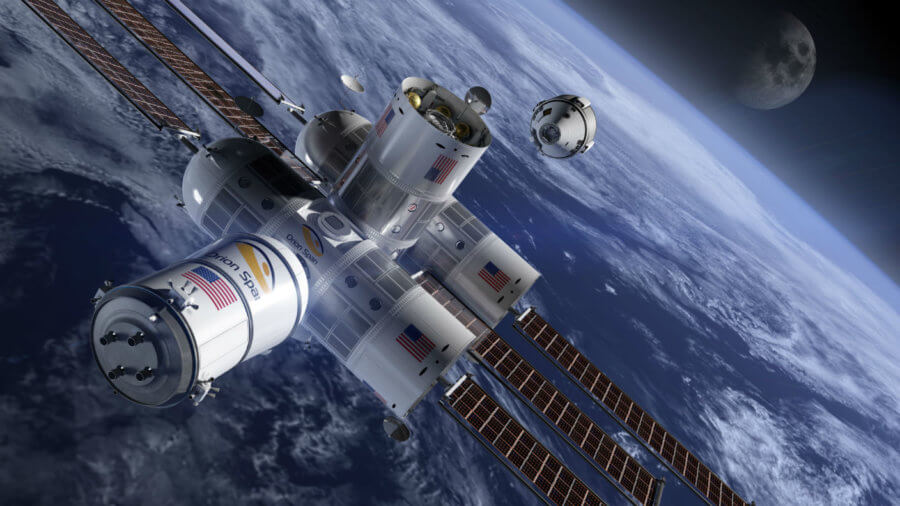 It won't be cheap, but your holiday plans could include a trip to the edge of Earth's atmosphere or beyond--before the end of this year. Several space tourism companies are zeroing in on their first launch. Bob Smith, CE...
The idea that women are cyclical cuckolders bites the dust
The Economist - 10 May 2018 16:54 Equally unattractive at any time of the month? ONE of the more intriguing findings in the field of evolutionary psychology over the past two decades has been that ovulating women are more strongly attracted to men with f...
How do you define "safe driving" in terms a machine can understand?
The Economist - 10 May 2018 16:54 WHEN people learn to drive, they subconsciously absorb what are colloquially known as the "rules of the road". When is it safe to go around a double-parked vehicle? When pulling out of a side street into traffic, what is...
A better way to transmit messages underwater
The Economist - 10 May 2018 16:54 RADIO waves cannot penetrate water, so cannot be used for submarine communication. That is why the sea is probed by sonar, not radar. But, as people and their machines venture ever farther into the deep, ways of building...
Congress Wants to Put a Bunch of Money into the Search for Aliens
Live Science - 10 May 2018 16:52 After a 25-year gap, the federal government may fund the search for intelligent aliens with $10 million for the next two years.
Kilauea Volcano Could Launch 10-Ton Ballistic Boulders in a Dramatic Explosion
Live Science - 10 May 2018 16:51 Geologists warn that Hawaii's Kilauea volcano could start spewing rocks
 Global
 Great Britain
 Indian
 South Africa